
Ethical scenarios test your decision-making and communication under pressure in medical interviews. Understanding established frameworks and practical examples equips you to deliver thoughtful, reflective responses grounded in Australian medical values. This guide explores evaluation criteria, patient-focused examples, and strategies to help you confidently navigate ethical dilemmas and demonstrate your readiness for medical school.
Table of Contents
- How To Evaluate Ethical Criteria In Interview Scenarios
- Example Scenarios Demonstrating Individual Patient Focus And Autonomy
- Balancing Collective Benefits: Scenarios Comparing Individual And Team Ethics
- How To Decide Your Best Approach In Ethical Interview Scenarios
- Build Confidence For Medical Interviews With Deepmock
Key takeaways
| Point | Details |
|---|---|
| Ethical criteria framework | Interviewers assess your understanding of autonomy, beneficence, non-maleficence, and justice using Australian medical principles. |
| Patient-focused decision-making | Demonstrating respect for individual patient autonomy and informed consent strengthens your responses. |
| Balancing individual and collective ethics | Articulating how you weigh patient needs against team consistency and fairness shows ethical maturity. |
| Structured reasoning over memorisation | Interviewers value your reflective process and justification more than scripted answers. |
| Practical preparation strategies | Practising with mock scenarios and studying AMA guidelines builds interview confidence and competence. |
How to evaluate ethical criteria in interview scenarios
Medical interviewers assess your ability to apply core ethical principles in complex scenarios. The AMA Code of Ethics 2025 outlines guidance for ethical decision-making in professional relationships and community responsibilities. This framework centres on respect for persons, autonomy, beneficence, non-maleficence, and justice.
When evaluating your responses, panels look for evidence that you recognise patient autonomy through informed consent processes. They want to see you identify ways to maximise benefits whilst minimising harms to patients and communities. Your answers should demonstrate fairness and consistency in applying ethical standards across different situations.
Interviewers also assess whether you consider multiple stakeholders, including patients, families, colleagues, and the healthcare system. They evaluate how you balance competing interests and acknowledge uncertainty. Your ability to articulate ethical tensions and justify decisions using established principles signals professional maturity.
Key criteria interviewers prioritise include:
- Recognition of patient autonomy and right to informed decision-making
- Commitment to beneficence by prioritising patient wellbeing
- Application of non-maleficence to avoid or minimise harm
- Demonstration of justice through fair resource allocation and equitable care
- Acknowledgement of professional responsibilities and boundaries
Pro Tip: Frame your responses to show you view patients holistically, considering their physical, emotional, and social contexts. Reflect on how your decision aligns with professional ethical standards whilst respecting individual circumstances. This approach signals readiness for medical interview confidence and real-world clinical practice.
Example scenarios demonstrating individual patient focus and autonomy
Australian clinicians prioritise individual patient care when managing ethical dilemmas, particularly in resource allocation contexts. Interview scenarios often test whether you can articulate this patient-centred approach whilst acknowledging broader system constraints.
Consider a scenario where you must decide whether to expedite surgery for a patient experiencing significant pain, potentially delaying another patient's non-urgent procedure. A strong response demonstrates respect for autonomy by exploring the first patient's informed preferences and quality of life impacts. You should acknowledge the ethical tension between minimising harm to the individual and maintaining fairness across the waiting list.

Another common scenario involves disclosing medical errors to patients. Your response should emphasise transparency and patient autonomy, explaining how honest disclosure respects patients' rights to make informed decisions about their ongoing care. Acknowledge the difficulty whilst affirming your commitment to professional integrity and patient-centred care.
Scenarios testing patient focus and autonomy include:
- Balancing patient preferences against clinical recommendations when treatments carry significant risks
- Managing confidentiality requests that may impact family members' health decisions
- Responding to patients who refuse recommended interventions based on personal beliefs
- Allocating limited appointment slots between urgent and routine patient needs
- Addressing situations where patient autonomy conflicts with harm prevention duties
When tackling these scenarios, demonstrate your understanding that holistic patient assessment goes beyond clinical indicators. Consider social determinants, patient values, and the therapeutic relationship. Show awareness that minimising harms like prolonged waiting times or inadequate pain management directly impacts individual patient wellbeing and trust in the healthcare system.
Balancing collective benefits: scenarios comparing individual and team ethics
Complex ethical scenarios require you to navigate tensions between individual patient advocacy and broader collective responsibilities. Clinicians apply additional values including team consistency, fairness across patient populations, and systemic sustainability when making decisions.
Consider a scenario where departmental policy requires standardised waiting list prioritisation, but you believe an individual patient warrants exception based on unique circumstances. Your response should acknowledge both the value of consistent team-based policies and the imperative to advocate for individual patient needs.
| Approach | Advantages | Disadvantages |
|---|---|---|
| Prioritise individual patient exception | Maximises benefit for specific patient; demonstrates patient advocacy; respects unique circumstances | May undermine team consistency; could create perceptions of unfairness; challenges departmental efficiency |
| Maintain standardised team policy | Ensures fairness across patient cohort; supports team cohesion; provides clear decision-making framework | May not address exceptional individual needs; could compromise specific patient outcomes; limits clinical judgement flexibility |
When balancing individual and collective ethics, consider:
- How your decision impacts team trust and consistency in future situations
- Whether making an exception creates precedent that could affect other patients
- The degree to which standardised policies genuinely serve fairness versus administrative convenience
- Your ability to advocate for policy review if systematic issues emerge
- How transparent communication with patients and colleagues maintains professional relationships
Pro Tip: Articulate your awareness of ethical complexity rather than offering simplistic solutions. Explain how you would seek input from colleagues, consult institutional ethics resources, or escalate decisions when appropriate. This demonstrates professional humility and commitment to collaborative decision-making, qualities highly valued in medical interview confidence assessments and clinical practice.
How to decide your best approach in ethical interview scenarios
Interviewers value your reasoning process and reflective capacity over memorised responses. The Code of Ethics serves as a resource to inform reflection and decision-making about ethical issues, not a prescriptive rulebook. Your goal is demonstrating thoughtful analysis aligned with professional standards and personal integrity.
Follow these steps to develop well-reasoned responses:
- Identify all stakeholders affected by the ethical dilemma, including patients, families, colleagues, and the healthcare system.
- Clarify the ethical principles in tension, such as autonomy versus beneficence or individual needs versus collective fairness.
- Consider multiple courses of action, articulating potential benefits and harms of each approach.
- Justify your preferred decision using Australian medical ethical frameworks and professional standards.
- Acknowledge uncertainty and limitations in your reasoning, showing openness to alternative perspectives.
- Reflect on how you would seek guidance or support in implementing your decision in real practice.
Your responses gain strength when you connect ethical principles to concrete actions. Rather than simply stating you value autonomy, explain how you would ensure informed consent through clear communication and shared decision-making processes. Instead of claiming commitment to non-maleficence, describe specific steps to identify and minimise potential harms.
Align your answers with the Australian medical context by referencing relevant professional standards and demonstrating awareness of local healthcare system realities. Show understanding that ethical practice occurs within resource constraints, diverse patient populations, and evolving clinical evidence. This contextual awareness signals readiness for the professional challenges you will face.
Practising with mock interviews allows you to refine your ethical reasoning skills and receive feedback on your communication approach. Use ethical frameworks as guides for structuring your thinking, but allow your authentic values and experiences to inform your responses. Interviewers recognise genuine reflection and can distinguish it from rehearsed scripts.
Build confidence for medical interviews with Deepmock
Applying ethical principles effectively requires practice with realistic scenarios and constructive feedback. Deepmock provides AI-powered simulations tailored specifically for medical interviews, including complex ethical dilemmas that mirror actual MMI stations. You can record responses, receive detailed analysis of your reasoning and communication, and track improvement over time.
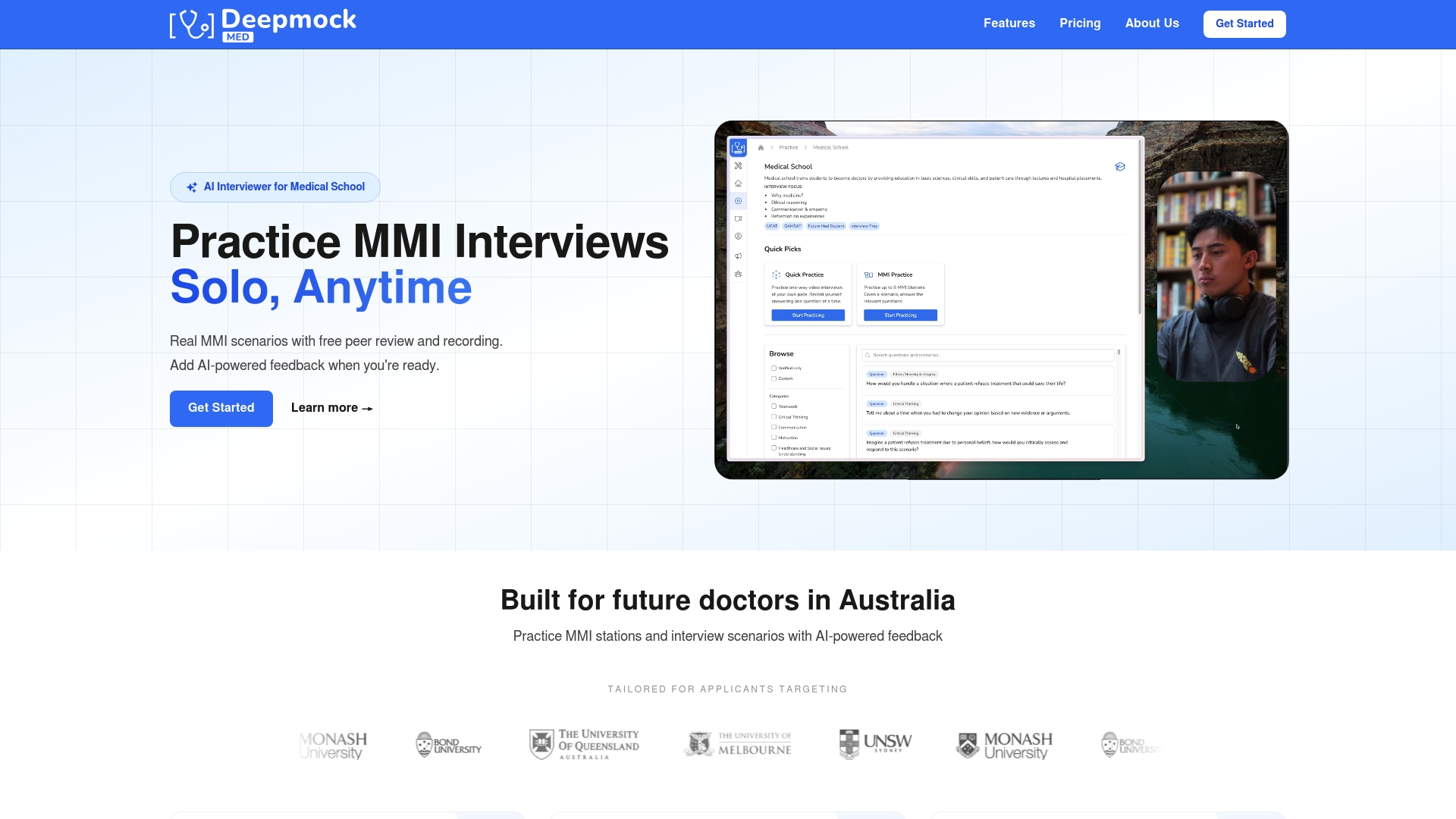
The platform offers flexible pricing plans suitable for all applicants, from free trials with limited analyses to premium subscriptions providing unlimited practice and feedback. Deepmock's tailored approach helps you internalise ethical frameworks whilst developing your authentic voice and confidence for medical interviews. Transform your preparation from theory to readiness through structured, accessible practice designed for Australian medical school applicants.
FAQ
What are examples of ethical interview scenarios for medical school?
Common scenarios include patient confidentiality breaches, informed consent challenges, resource allocation dilemmas, and conflicts of interest between professional and personal responsibilities. You might face situations involving medical errors, end-of-life decisions, or balancing patient autonomy against harm prevention. Understanding these scenario types helps you prepare thoughtful responses demonstrating ethical reasoning and professional judgement.
How can I prepare for ethical questions in medical interviews?
Study key principles from the AMA Code of Ethics and relevant Australian medical guidelines to build your foundational knowledge. Practise with mock interviews to improve your confidence and refine your ethical reasoning under time pressure. Reflect on personal values and clinical experiences to add authenticity and depth to your responses, showing interviewers your genuine commitment to ethical practice.
What is the best way to approach ethical dilemmas in medical interviews?
Use structured approaches by identifying stakeholders, clarifying ethical conflicts, and evaluating possible outcomes for each course of action. Demonstrate empathy, transparency, and professional judgement throughout your response. Avoid absolute answers that oversimplify complex situations. Instead, acknowledge ethical tensions and justify your reasoning using established principles whilst showing openness to alternative perspectives.
Are there Australian-specific ethics standards to consider?
Yes, the AMA Code of Ethics 2025 provides key guidance for ethical decision-making in Australian medicine. Referencing these standards signals your understanding of professional expectations and your preparedness to practise within the Australian healthcare context. Familiarity with local ethical frameworks demonstrates your commitment to meeting national professional standards and serving diverse patient populations effectively.