
Medical school interviews assess far more than your academic transcript or ATAR score. Scenario-based interview questions simulate real clinical, ethical, and communication challenges you'll face as a doctor. Multiple Mini Interviews, the predominant format in Australian medical schools, rely heavily on these scenarios to evaluate your suitability for a demanding profession. Mastering this style of preparation is essential for admission success.
Table of Contents
- Introduction To Scenario-Based Interview Practice
- Why Scenario-Based Practice Matters
- Key Skills Assessed In Scenario-Based Interviews
- How Scenario-Based Practice Works
- Common Misconceptions About Interview Preparation
- Effective Practice Strategies For Scenario-Based Questions
- Role Of AI And Technology In Scenario-Based Interview Practice
- Conclusion And Next Steps For Medical School Applicants
- Prepare With Deepmock For MMI Success
- Frequently Asked Questions
Key takeaways
| Point | Details |
|---|---|
| Scenario practice builds MMI skills | Practising diverse scenarios improves critical thinking, empathy, and adaptability under pressure. |
| Empathy and ethics are top priorities | Medical schools assess your ability to navigate dilemmas with compassion and sound judgment. |
| MMIs use multiple timed stations | Each station tests different scenarios independently, requiring quick thinking and structured responses. |
| AI tools enhance preparation | Platforms provide realistic simulations, instant feedback, and progress tracking for targeted improvement. |
| Practice reduces anxiety significantly | Confidence increases by approximately 40% with consistent scenario-based preparation. |
Introduction to scenario-based interview practice
Scenario-based interview practice involves responding to realistic clinical, ethical, and communication situations under timed conditions. Unlike traditional question-and-answer formats, these scenarios require you to demonstrate judgment, empathy, and problem-solving in contexts mirroring actual medical practice. MMIs are widely used in Australian medical schools with multiple stations lasting several minutes each, challenging you to adapt quickly across diverse topics.
This format assesses non-academic personal qualities that define effective doctors. You might encounter a patient refusing treatment, a colleague behaving unethically, or a resource allocation dilemma. Each scenario tests your ability to think critically while maintaining compassion and professionalism.
Key characteristics of scenario-based MMI practice include:
- Multiple independent stations with distinct scenarios
- Time limits of 5 to 10 minutes per station
- Assessment of empathy, ethics, communication, and clinical reasoning
- Standardised scoring to reduce interviewer bias
- Realistic simulation of healthcare challenges
Understanding this format is your first step toward reducing interview anxiety. When you know what to expect, you can focus energy on developing the skills that matter rather than worrying about the unknown. Scenario practice transforms vague preparation into targeted skill-building that directly addresses MMI demands.
Why scenario-based practice matters
Traditional rehearsal of generic interview questions leaves you unprepared for the dynamic nature of MMIs. Scenario-based practice reduces stress by familiarising you with the unexpected twists that real medical situations present. Confidence improves by about 40% when applicants engage in targeted scenario work rather than memorising scripted answers.
"The best predictor of interview success is not how much you know, but how well you can apply knowledge under pressure whilst demonstrating genuine empathy."
Realistic scenarios foster quick thinking and adaptability. When you've practised navigating ethical dilemmas or communication breakdowns, you develop mental frameworks that help you respond effectively to novel situations. Practice with diverse scenarios increases response adaptability by over 30%, giving you the flexibility to handle whatever your MMI stations throw at you.
Benefits of consistent scenario practice include:
- Reduced performance anxiety on interview day
- Improved ability to structure answers under time pressure
- Enhanced empathy and ethical reasoning skills
- Greater confidence in handling unexpected questions
- Development of authentic communication style
Many applicants mistakenly believe that natural charisma or intelligence alone will carry them through interviews. Research consistently shows otherwise. Deliberate practice with realistic scenarios is what separates successful candidates from those who struggle, regardless of natural ability.
Key skills assessed in scenario-based interviews
Medical schools use scenario-based questions to evaluate specific competencies that predict clinical success. Empathy is among the top three qualities assessed in medical school interviews, measuring your ability to acknowledge and validate patient feelings authentically. This isn't about saying what you think interviewers want to hear. It's about demonstrating genuine understanding of human experiences.
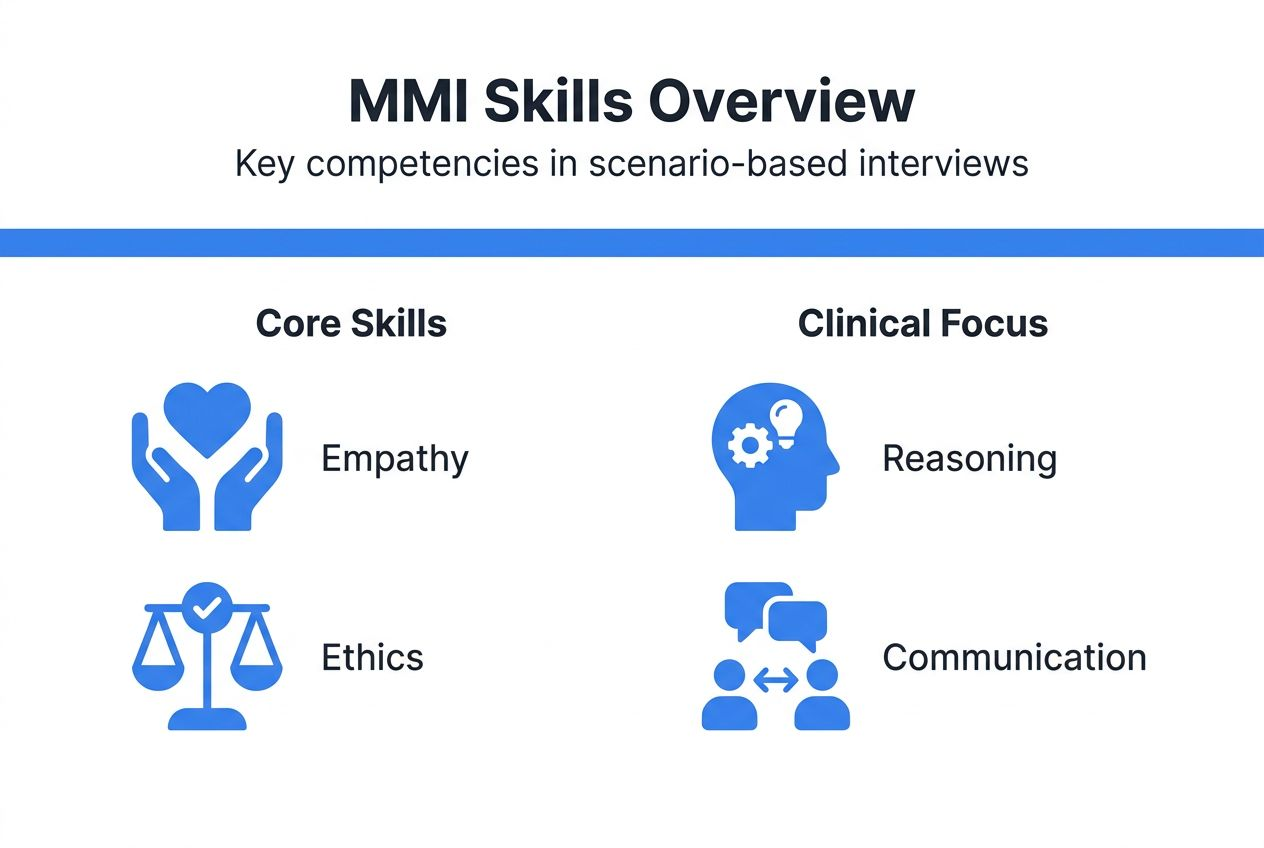
Ethical judgment reveals how you navigate complex dilemmas without clear right answers. When confronted with scenarios involving patient autonomy, confidentiality, or resource allocation, your reasoning process matters as much as your conclusion. Interviewers assess whether you can balance competing values thoughtfully.
Effective communication builds trust and clarity. You must articulate complex ideas simply whilst remaining sensitive to emotional contexts. This skill extends beyond verbal fluency to include active listening, appropriate body language, and adaptive communication styles.
Core competencies evaluated through scenarios:
- Empathy and emotional intelligence in patient interactions
- Ethical reasoning and awareness of professional standards
- Clear communication tailored to different audiences
- Critical thinking and clinical judgment under pressure
- Professionalism and integrity in challenging situations
Pro Tip: During practice, resist the urge to rush into solutions. Pause briefly to acknowledge emotions in the scenario authentically before moving to problem-solving. This demonstrates genuine empathy rather than performative concern.
You must balance clinical reasoning with interpersonal skills. A technically correct answer delivered without compassion fails to demonstrate the holistic competence medical schools seek. Scenario practice helps you integrate these dimensions naturally.
How scenario-based practice works
MMI stations test you on different scenarios independently, each with separate scoring to reduce interviewer bias. This structure means a weak performance at one station doesn't contaminate your evaluation at others. Understanding this format helps you mentally reset between stations rather than dwelling on perceived mistakes.
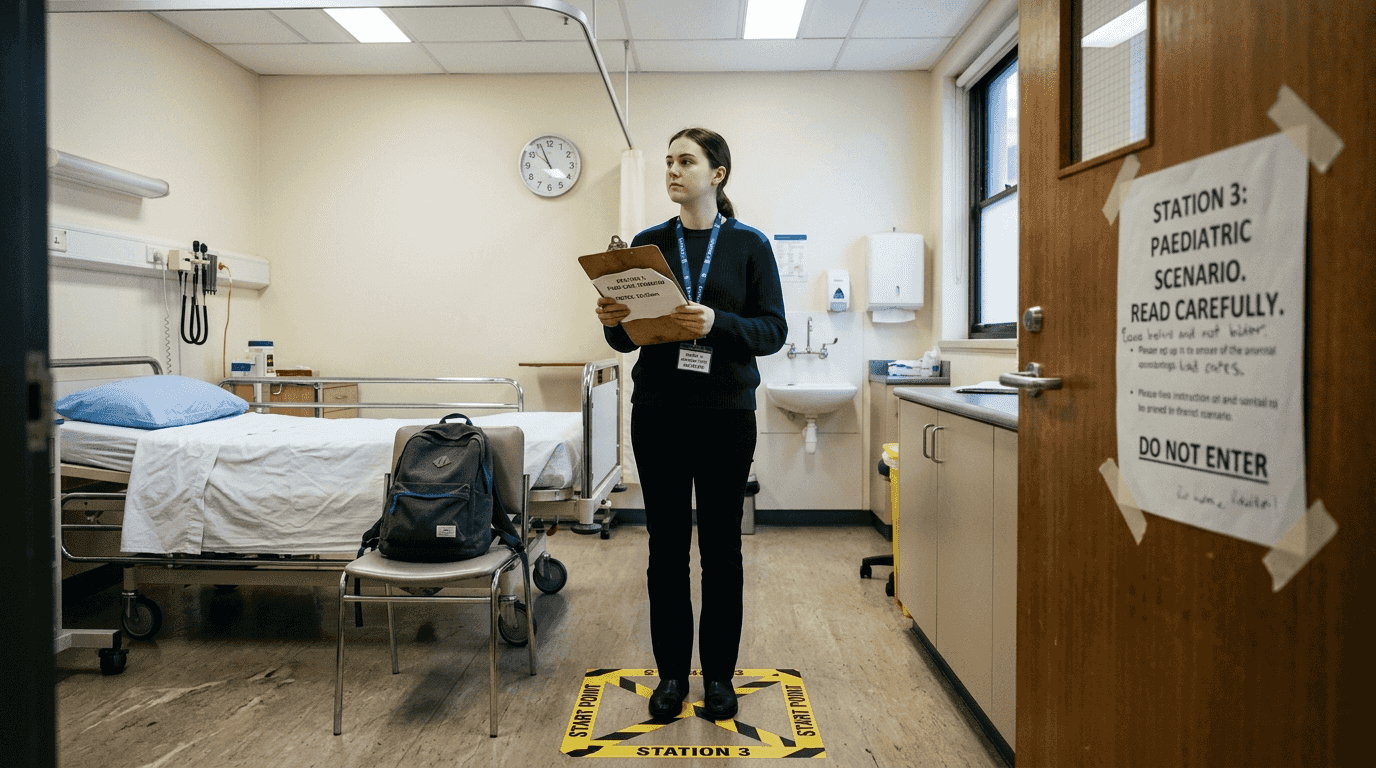
Each station presents a distinct challenge. You might discuss a medical ethics case at one station, role-play a difficult patient conversation at the next, then analyse a healthcare policy dilemma at another. This diversity tests your breadth of competencies and resilience under changing demands.
| MMI Component | Duration | Assessment Focus |
|---|---|---|
| Reading time | 2 minutes | Understanding scenario context |
| Response time | 5-8 minutes | Demonstrating skills and reasoning |
| Number of stations | 6-10 | Comprehensive skill evaluation |
| Scoring method | Independent | Reducing bias across assessors |
Practising under timed conditions improves pacing and focus. When you simulate actual MMI time constraints during preparation, you develop an internal clock that helps you structure responses appropriately. This prevents rambling or running out of time before making key points.
Scenario practice develops real-time thinking skills that traditional study cannot replicate. You learn to:
- Quickly identify the core issue in complex scenarios
- Generate multiple possible approaches or solutions
- Articulate reasoning clearly under time pressure
- Adjust communication style to different contexts
- Maintain composure when encountering unfamiliar topics
Understanding the format lowers anxiety on interview day significantly. When the structure feels familiar, you can channel nervous energy into thoughtful responses rather than worrying about logistics or expectations.
Common misconceptions about interview preparation
Many applicants believe interview skills are innate rather than developed. This dangerous myth prevents candidates from investing adequate effort in preparation. The truth is that even naturally charismatic individuals benefit enormously from structured scenario practice, whilst those who feel less confident can develop strong interview performance through deliberate work.
Relying only on traditional question rehearsal limits adaptation to unexpected scenarios. Memorising answers to common questions like "Why medicine?" or "Tell me about yourself" provides minimal preparation for the dynamic, unpredictable nature of scenario-based stations. You need practice that builds flexible thinking skills.
"The candidates who excel in MMIs aren't necessarily the most academically brilliant. They're the ones who've practised responding to diverse scenarios until their empathy and reasoning flow naturally."
Misconceptions that hinder effective preparation:
- Believing natural talent eliminates need for practice
- Assuming traditional interview prep suffices for MMIs
- Thinking you can wing scenarios without structured practice
- Expecting scenarios to have single correct answers
- Underestimating the importance of time management
Scenario-based preparation leads to 25% higher scores compared to traditional preparation alone. This isn't a marginal improvement. It's the difference between a competitive application and rejection. Ignoring scenario prep increases your risk of encountering unexpected challenges you're unprepared to handle effectively.
Reject these myths to create more effective preparation strategies. Interview success requires intentional skill development through realistic practice. The applicants who secure offers are those who treat interview preparation as seriously as they treat academic study.
Effective practice strategies for scenario-based questions
Developing strong scenario-based interview skills requires systematic practice using proven methods. Start by identifying knowns and unknowns in each scenario. What information are you given? What's missing? This analysis prevents you from making assumptions or overlooking critical details that should guide your response.
Structured approach to analysing scenarios improves scoring by up to 20%. Use a consistent framework:
- Acknowledge the emotional and ethical dimensions immediately
- Identify the key stakeholders and their perspectives
- Consider relevant ethical principles and professional standards
- Generate multiple possible approaches or solutions
- Articulate your recommended approach with clear reasoning
- Demonstrate awareness of limitations and uncertainties
Structure your answers for clarity and impact. Begin with a brief statement of your understanding, then walk through your reasoning process systematically. Avoid jumping straight to conclusions without showing your thought process. Interviewers want to see how you think, not just what you conclude.
Show empathy genuinely to build trust during responses. This means using language that validates emotions rather than dismissing them. Say "I can understand why the patient feels frustrated" rather than immediately launching into solutions. Authentic empathy creates rapport even in role-play scenarios.
Pro Tip: Record yourself answering practice scenarios, then watch the playback critically. You'll notice verbal tics, rushed pacing, or missed opportunities to demonstrate empathy that you didn't catch in the moment. Self-review accelerates improvement dramatically.
Practice with diverse ethical and clinical scenarios covering:
- Patient autonomy and consent issues
- Confidentiality dilemmas
- Resource allocation and fairness
- Colleague behaviour and professionalism
- Cultural sensitivity and communication barriers
- End-of-life care and difficult conversations
Diversity in practice scenarios builds mental flexibility. When you've considered dozens of different ethical frameworks and communication challenges, you develop pattern recognition that helps you adapt to novel situations during actual interviews.
Role of AI and technology in scenario-based interview practice
AI-driven platforms have transformed how medical school applicants prepare for MMIs. Deepmock interview practice platform provides realistic scenario simulations that mirror actual interview conditions, allowing you to practise anytime without coordinating with peers or mentors. This accessibility removes traditional barriers to consistent preparation.
Instant feedback identifies strengths and areas to improve immediately after each practice session. Rather than waiting days for a mentor's review, AI analysis highlights specific aspects of your delivery, content structure, and communication style that need refinement. This rapid feedback loop accelerates skill development significantly.
Key benefits of AI-powered scenario practice:
- Unlimited practice opportunities without scheduling constraints
- Immediate detailed feedback on performance
- Progress tracking showing improvement over time
- Customisable scenarios targeting specific skill gaps
- Peer collaboration features for shared learning
Analytics track progress over time, revealing patterns in your performance. You might discover that ethical dilemmas are your strength whilst communication role-plays need work. This data-driven insight lets you allocate practice time strategically rather than guessing where to focus effort.
Peer collaboration features allow shared learning and support. You can review fellow applicants' responses, offer feedback, and learn from approaches different from your own. This community dimension reduces the isolation of interview preparation whilst exposing you to diverse perspectives.
Technology offers flexible, accessible preparation options that fit around your existing commitments. Whether you have 15 minutes between classes or an hour on Sunday evening, AI platforms let you practise meaningfully. This flexibility is crucial for busy premedical students juggling academics, extracurriculars, and UCAT preparation.
Conclusion and next steps for medical school applicants
Scenario-based interview practice is not optional for Australian medical school applicants. It's the foundation of MMI success, building the empathy, ethical reasoning, communication skills, and critical thinking that selection panels prioritise. Traditional preparation alone leaves you vulnerable to the unpredictable, high-pressure nature of multiple mini interview formats.
Preparation increases confidence and reduces interview anxiety dramatically. When you've practised dozens of diverse scenarios under realistic conditions, interview day feels familiar rather than terrifying. This psychological advantage alone justifies the investment in structured preparation.
Actionable steps to enhance your MMI readiness:
- Begin scenario practice at least three months before interviews
- Use AI platforms to simulate realistic MMI conditions regularly
- Practice diverse scenario types including ethics, communication, and clinical reasoning
- Seek feedback from multiple sources including AI analysis and peer review
- Track your progress systematically to identify improvement areas
Create a structured practice plan incorporating diverse scenarios weekly. Consistency matters more than cramming. Fifteen minutes of daily scenario work over three months produces better results than intensive practice the week before interviews. Develop skills gradually and sustainably.
Start early to refine skills before your MMI day arrives. The applicants who receive offers are those who treated interview preparation as a long-term skill development process rather than last-minute rehearsal. Your future medical career depends partly on how seriously you approach this preparation now.
Prepare with Deepmock for MMI success
Transform your interview preparation with AI-powered scenario practice designed specifically for Australian medical school applicants. Deepmock platform for medical interview practice offers realistic MMI simulations across ethical dilemmas, clinical situations, and communication challenges, providing the comprehensive preparation you need to excel.
Receive personalised instant feedback identifying exactly where your responses excel and where improvement is needed. Track performance analytics showing your progress over weeks and months of practice. The platform's flexibility lets you practise anywhere, fitting preparation seamlessly into your schedule between lectures, study sessions, and other commitments.
Whether you choose the free tier for initial exploration or premium subscriptions for unlimited feedback, Deepmock provides the targeted practice that increases interview scores by 20 to 30%. Join thousands of successful applicants who built their confidence and skills through consistent, evidence-based scenario preparation.
Frequently asked questions
What types of scenarios should I expect in medical school MMIs?
Typical scenarios include ethical dilemmas involving patient autonomy or confidentiality, communication challenges with difficult patients or families, and clinical reasoning questions about treatment decisions. Each station lasts around 5 to 10 minutes with a clear prompt providing context. Practice using structured frameworks that address emotional dimensions, stakeholder perspectives, and ethical principles systematically. Focus on demonstrating empathy, sound ethical judgment, and clear decision-making processes in your responses.
How does scenario-based practice improve my chances of admission?
Practising scenarios can increase interview scores by 20 to 30% compared to traditional preparation alone. Since interview performance contributes up to 50% of admission decisions at many Australian medical schools, this improvement directly translates to higher acceptance rates. Increased confidence reduces nervous errors during actual interviews. Demonstrating genuine empathy and ethical reasoning through practice strengthens your entire application narrative. Feedback-driven improvement accelerates skill development far beyond what self-study achieves.
What common mistakes should I avoid during scenario-based interviews?
Skipping preparation because you expect natural communication skills to suffice is the biggest mistake. Many strong candidates fail interviews despite excellent academics because they neglected scenario practice. Focusing only on traditional questions without practising diverse scenarios leaves you unprepared for MMI variety. Failing to show empathy adequately or demonstrate ethical reasoning explicitly costs points even when your conclusions are sound. Ignoring time management leads to incomplete answers that don't showcase your full capabilities. Poor answer structure confuses interviewers about your thought process even when your reasoning is solid.